
Valuation Premise
Valuation Premise is an important concept in machinery and equipment appraisal. It establishes the circumstances under which an asset’s value is estimated, including whether equipment will remain in operation or be sold.
Understanding this concept helps business owners, lenders, and financial professionals interpret appraisal results correctly. The same machinery can have different estimated values depending on its expected use, location, and sale conditions.
What Is a Valuation Premise?
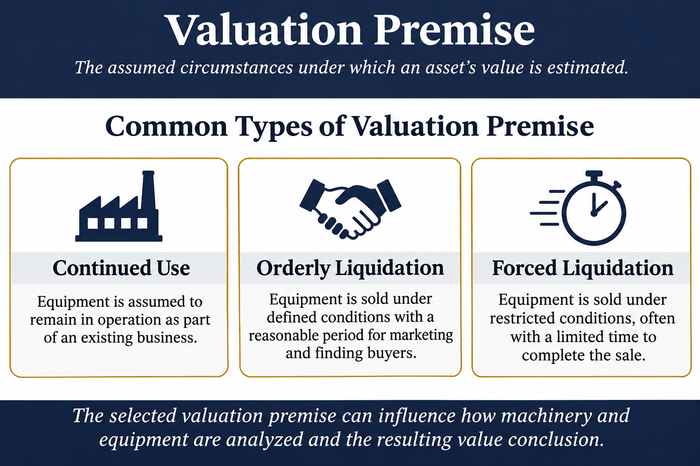
A Valuation Premise describes the assumed circumstances surrounding an asset when its value is determined.
In equipment appraisal, these circumstances may involve continued operation, removal from a facility, or liquidation. Each situation presents different considerations that can influence the final valuation.
For example, a manufacturing machine operating within an established production facility may have a different value than the same machine being removed and sold separately.
The equipment itself may be identical. However, the assumptions surrounding its use or sale can change the estimated value.
This distinction helps appraisers develop conclusions appropriate for the assignment.
Common Types of Valuation Premise
Machinery and equipment appraisals generally consider several possible circumstances when establishing a premise of value.
Continued Use
Under a continued-use premise, equipment is assumed to remain in operation as part of an existing business or production process.
This premise may be appropriate when evaluating installed machinery that contributes to ongoing operations.
For example, a manufacturing facility may contain specialized equipment that operates as part of an integrated production line. The equipment’s installation, configuration, and relationship to other assets may be relevant to its valuation.
However, continued use does not automatically mean an asset has a higher value. The appraiser must still consider its condition, utility, and applicable market evidence.
Orderly Liquidation
An orderly liquidation premise assumes equipment will be sold under defined conditions that allow a reasonable period for marketing and finding buyers.
This situation may arise when a company closes a facility, sells excess equipment, or restructures its operations.
The available marketing period allows sellers to reach potential purchasers and evaluate offers.
Nevertheless, the expected selling price may differ from the value of equipment remaining in operation.
Forced Liquidation
A forced liquidation premise involves the sale of equipment under restricted conditions, often with limited time available to complete the transaction.
These circumstances may occur during certain business closures, financial difficulties, or other situations requiring rapid asset disposition.
A shorter marketing period can reduce the opportunity to locate qualified buyers.
As a result, the estimated proceeds may be lower than those associated with a more flexible selling process.
How Valuation Premise Affects Equipment Value
The selected premise influences how an appraiser analyzes machinery and equipment.
Several factors may become more or less significant depending on the circumstances being evaluated.
These include:
- Equipment location: Installed machinery may require specialized removal or transportation.
- Market demand: Buyer interest can vary depending on the type and condition of equipment.
- Sale timeframe: A limited marketing period may affect potential selling prices.
- Installation costs: Certain equipment may have additional utility when maintained within an operating facility.
- Asset condition: Maintenance history, age, and functionality can influence value under different circumstances.
For example, a commercial printing press may be useful within an operating facility. However, selling that same press separately could involve dismantling, transportation, and reinstallation expenses.
These considerations help explain why valuation results can differ even when the underlying asset remains unchanged.
Valuation Premise and Appraisal Standards
Professional appraisers must identify the relevant assignment conditions before developing a valuation conclusion.
The appropriate premise works alongside the definition of value, intended use, and other assignment assumptions.
The Uniform Standards of Professional Appraisal Practice (USPAP) provide professional standards for developing and reporting credible appraisals.
These standards emphasize identifying the appraisal problem and developing a scope of work appropriate for the assignment.
For machinery and equipment, this process helps ensure that the reported value reflects the circumstances being evaluated.
Businesses seeking additional information about these valuation requirements can review Truman Mox’s article on USPAP Equipment Appraisals for Lenders.
Why the Correct Valuation Premise Matters
Selecting the appropriate premise is essential because appraisal reports are often used to support important financial decisions.
A lender evaluating equipment as collateral may need to understand its potential resale value. Meanwhile, a business owner planning continued operations may require a valuation based on different assumptions.
If the premise does not match the intended purpose, the resulting value conclusion may not answer the client’s actual question.
Clear communication between the client and appraiser helps establish the appropriate conditions before the appraisal begins.
This also allows the final report to explain the assumptions supporting its conclusions.
Understanding Your Equipment’s Value
A Valuation Premise provides the foundation for understanding how machinery and equipment are valued under specific circumstances.
Whether assets will remain in operation, be sold through an orderly process, or require accelerated liquidation, the selected premise helps establish the appropriate basis for the appraisal.
Truman Mox provides independent, USPAP-compliant machinery and equipment valuations for businesses, lenders, attorneys, and financial professionals nationwide.
Our team evaluates equipment across numerous industries while considering the intended use and requirements of each assignment.
For assistance determining the appropriate valuation for your assets, explore our Machinery and Equipment Appraisal Services.