
The intended use of an appraisal is one of the most important elements of machinery and equipment valuation. It identifies why an appraisal is being performed and how its results are expected to be used.
Whether an appraisal supports bank financing, business planning, insurance, or legal matters, its purpose helps establish the appropriate scope of work. Understanding this concept allows businesses and financial institutions to request valuations that meet their specific needs.
Understanding the Intended Use of an Appraisal
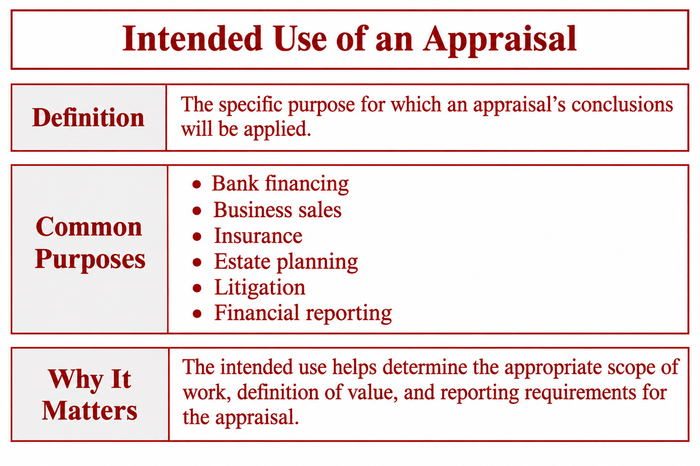
In professional valuation, intended use refers to the specific purpose for which an appraisal’s conclusions will be applied.
For example, a manufacturing company may need an equipment appraisal to secure a business loan. Another company may require a valuation to support the sale of its machinery. Although both assignments involve equipment, their objectives may differ.
The appraiser must identify the intended use before developing the valuation. This helps establish the appropriate research, analysis, and reporting requirements.
According to the Appraisal Foundation, the Uniform Standards of Professional Appraisal Practice (USPAP) establish recognized standards for developing and reporting credible appraisal results.
These standards emphasize the importance of identifying the assignment’s purpose and intended users.
Common Purposes of Machinery and Equipment Appraisals
Machinery and equipment appraisals serve numerous financial, legal, and business purposes. The intended use determines how the valuation will support a particular decision.
Common applications include:
- Bank Financing: Establishing equipment values to support collateral-based lending decisions.
- Business Sales: Providing asset valuations during business acquisitions or ownership transitions.
- Insurance: Supporting decisions involving equipment coverage and insurable values.
- Estate Planning: Determining asset values for estate administration and applicable tax requirements.
- Litigation: Providing independent valuation opinions for legal proceedings.
- Financial Reporting: Supporting accounting, auditing, and asset reporting requirements.
Each assignment may require different assumptions, definitions of value, and documentation.
How Intended Use Affects Equipment Valuation
The intended use of an appraisal can influence several aspects of the valuation process.
An appraisal prepared for collateral lending may require an opinion of Orderly Liquidation Value. A business transaction may instead call for Fair Market Value.
These definitions reflect different market assumptions and can produce different conclusions for the same equipment.
For example, a CNC machining center may have significant value when sold under normal market conditions. However, its estimated value could differ if the equipment must be sold within a limited marketing period.
The equipment itself has not changed. Instead, the conditions under which its value is measured are different.
This distinction demonstrates why an appraiser must understand the assignment’s purpose before selecting the appropriate valuation methods.
Intended Use and Intended Users
Although these terms are closely related, they describe different aspects of an appraisal assignment.
Intended use identifies why the appraisal is being performed.
Intended users identify the client and any other parties the appraiser identifies, by name or type, as users of the appraisal report.
For example, a bank may request an appraisal for collateral lending. The intended use would be supporting a lending decision, while the financial institution would be an intended user.
Clearly identifying both elements helps establish who may rely on the report and for what purpose.
An appraisal prepared for one purpose should not automatically be used for an unrelated decision without considering whether it is appropriate.
The Role of Intended Use in USPAP Compliance
The intended use of an appraisal is an important component of USPAP-compliant valuation work.
Under USPAP, appraisers must identify the intended use and intended users as part of the assignment problem. They must also develop an appropriate scope of work to produce credible results.
This process helps establish the level of research, inspection, analysis, and reporting necessary for the assignment.
For machinery and equipment, these considerations may include equipment condition, market demand, asset location, and available comparable sales.
A properly developed appraisal should clearly communicate its conclusions, assumptions, and limitations.
Businesses seeking additional information can explore Truman Mox’s Machinery and Equipment Appraisal Services.
Why Defining the Appraisal Purpose Matters
Clearly establishing the appraisal’s purpose helps prevent misunderstandings between the client, appraiser, and other intended users.
Without an identified purpose, a report may not provide the type of value or supporting information needed for the decision at hand.
For example, an equipment appraisal developed for internal planning may not satisfy the documentation requirements of a lender or government agency.
Likewise, an appraisal prepared for a specific tax-related assignment may involve requirements that differ from those of a business sale.
Identifying the purpose early allows the appraiser to determine the appropriate scope of work and communicate any additional requirements before beginning the assignment.
Understanding the purpose of an appraisal helps businesses determine which valuation services best meet their needs. Truman Mox provides machinery and equipment appraisal services for financing, business transactions, financial reporting, and other valuation requirements.
Working With a Qualified Equipment Appraiser
A qualified machinery and equipment appraiser understands how different intended uses affect valuation assignments.
At Truman Mox, our appraisers provide independent, USPAP-compliant machinery and equipment valuations for lenders, business owners, attorneys, accountants, and other professionals nationwide.
Our experience spans manufacturing machinery, construction equipment, transportation assets, medical equipment, restaurant equipment, and other tangible business assets.
By understanding the purpose of each assignment, we develop valuations that address the client’s specific requirements while maintaining professional appraisal standards.
Establishing the Right Purpose for Your Appraisal
The intended use of an appraisal provides the foundation for a meaningful machinery and equipment valuation.
Whether the assignment involves financing, insurance, legal proceedings, or business transactions, clearly defining its purpose helps ensure that the appraisal addresses the appropriate valuation questions.
Truman Mox provides professional machinery and equipment appraisal services throughout all 50 states.