
One of the first questions clients ask is, “How much will the machinery appraisal cost?” The honest answer is that every assignment is different.
A machinery appraisal may cost a few hundred dollars for a simple assignment. A larger or more complex project may cost several thousand dollars. Major facilities and specialized assignments can cost considerably more.
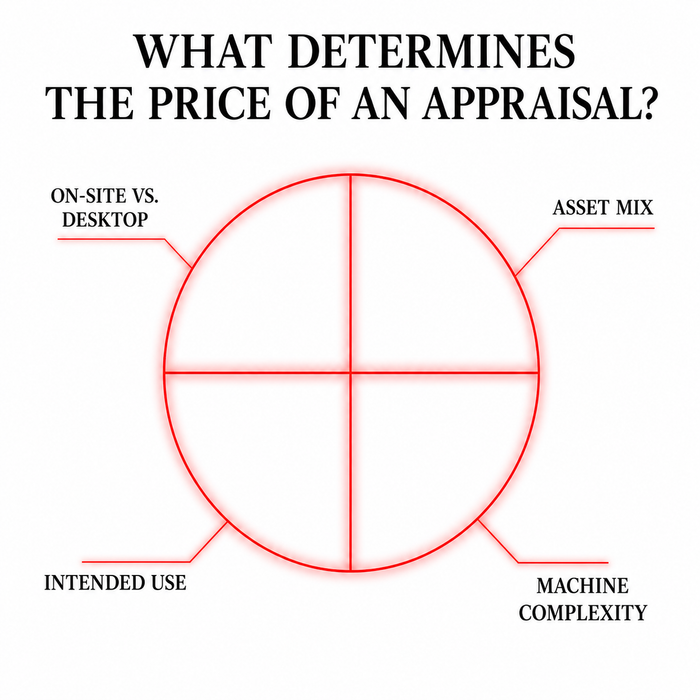
Several factors affect the final fee. These include the inspection type, asset mix, equipment complexity, intended use, and quality of the asset list.
What Determines Machinery Appraisal Cost?
Appraisal fees are generally based on the time and expertise needed to complete the assignment. An appraiser must first understand the scope of work.
A small list of common equipment may be relatively straightforward. A large manufacturing facility may require far more research and analysis.
The number of assets matters, but it does not tell the whole story. Ten highly specialized machines may require more work than 100 common assets.
The following factors usually have the greatest effect on the fee:
- Whether the appraisal is desktop or on-site
- The total number of assets
- The number of duplicate assets
- The variety of equipment
- The complexity of the machinery
- The condition of the asset list
- The quality of available photographs
- The purpose of the appraisal
- The required value definitions
- The reporting and documentation requirements
Desktop Appraisal Versus On-Site Appraisal
A desktop appraisal is completed without a physical inspection. The appraiser relies on information provided by the client.
This information may include asset lists, photographs, invoices, maintenance records, and equipment specifications. Desktop assignments generally cost less because they do not require travel or field inspection.
Desktop appraisals work best when the available records are detailed and reliable. Each asset should have a clear description, manufacturer, model, serial number, age, and location.
Good photographs can also improve the credibility of the analysis. Poor records may require additional research and follow-up.
An on-site appraisal includes a physical inspection of the equipment. The appraiser visits the location and observes the assets.
During the inspection, the appraiser may record model numbers, serial numbers, condition, and configuration. The appraiser may also identify assets missing from the original list.
On-site appraisals usually cost more due to travel and inspection time. However, they often provide stronger documentation and reduce uncertainty.
The appropriate inspection method depends on the assignment. Some lenders and attorneys require an on-site inspection. Others may accept a desktop appraisal when reliable information is available.
How the Asset List Affects the Fee
The quality of the asset list can significantly affect the appraisal fee. A clean and organized list saves time.
Ideally, the asset list should include:
- Manufacturer
- Model
- Serial number
- Year of manufacture
- Description
- Location
- Reported condition
- Hours or mileage, when applicable
A list containing only general descriptions requires more investigation. Entries such as “machine,” “truck,” or “restaurant equipment” are not enough for reliable valuation.
Missing model numbers can make market research difficult. Missing ages may require the appraiser to estimate the equipment’s vintage.
A poorly organized list may also contain duplicate entries. The appraiser must determine whether those entries represent separate assets or repeated records.
That verification takes time and can increase the fee.
Duplicate Assets Can Reduce Machinery Appraisal Cost
Duplicate equipment can make a large asset list more efficient to appraise. For example, a facility may have 100 identical CNC machines.
The appraiser may not need to conduct separate market research for every unit. One primary valuation analysis may support multiple similar assets.
The appraiser must still consider age, condition, options, and usage. However, duplicate assets can reduce the research required per item.
A list containing 500 identical machines may be easier than a list containing 100 different machines. Asset variety can be more important than the total item count.
Clients should identify duplicates whenever possible. Grouping similar assets can help the appraiser prepare a more accurate fee quote.
Equipment Complexity and Asset Mix
The type of equipment has a major effect on the amount of research required.
Common vehicles, forklifts, and construction equipment often have active secondary markets. Comparable sales and dealer listings may be readily available.
Specialized manufacturing systems can be much harder to value. These assets may have custom controls, tooling, software, or installation requirements.
Some machines are designed for a single process or production line. Their value may depend on continued demand for that specific application.
A mixed asset list also takes more time to analyze. One assignment might include CNC machines, vehicles, laboratory equipment, office furniture, and material-handling equipment.
Each category may require different market sources and valuation methods. A diverse asset mix will usually increase the machinery appraisal cost.
Intended Use and Reporting Requirements
The intended use of the appraisal is another important pricing factor. Not every appraisal requires the same level of analysis or documentation.
A preliminary estimate for internal planning may have a limited scope. A lender appraisal usually requires a more formal and well-supported report.
Litigation, tax, estate, and charitable donation assignments may require additional documentation. These reports must often withstand review by attorneys, accountants, government agencies, or opposing experts.
The appraiser may also need to develop multiple value opinions. These could include Fair Market Value, Orderly Liquidation Value, or Forced Liquidation Value.
Some assignments require installed and removed values. Others require gross and net liquidation values.
Each additional value premise requires analysis. More complex reporting requirements will generally increase the appraisal fee.
Why Experienced Appraisers Often Charge More
Experience and professional qualifications also affect appraisal pricing. A beginner may quote a lower fee to secure the assignment.
However, the lowest fee does not always produce the best value.
An experienced appraiser understands equipment markets, valuation methods, and reporting standards. That experience helps the appraiser identify problems before they affect the conclusions.
Qualified appraisers also know how to explain their research and support their opinions. This is especially important when a report will be reviewed by a lender, an attorney, an auditor, or a government agency.
A high-quality appraisal should be more than a spreadsheet with numbers. It should explain the assignment, methodology, market evidence, assumptions, and value conclusions.
An experienced appraiser will typically charge more than a beginner. In return, the client receives a more credible and defensible report.
A weak appraisal can create costly problems later. It may be rejected by a lender or challenged during litigation.
Paying for experience can reduce those risks.
Typical Machinery Appraisal Cost Ranges
There is no universal fee schedule for machinery appraisals. However, general pricing may fall into several broad ranges.
A limited desktop appraisal of one common asset may cost a few hundred dollars. A small-business equipment appraisal may range from several hundred to a few thousand dollars.
An on-site appraisal will usually cost more. Travel, inspection time, and reporting requirements must be considered.
Large manufacturing plants and specialized facilities may cost several thousand dollars or more. National assignments involving multiple locations can require much larger budgets.
A qualified appraiser should review the available information before quoting a fee. Flat pricing without reviewing the asset list may lead to an inaccurate scope.
How to Obtain an Accurate Appraisal Quote
Clients can help the appraiser provide a reliable quote by supplying detailed information at the beginning.
Provide the complete asset list, photographs, locations, and intended use. Explain whether an on-site inspection is required.
Also identify the value definitions needed and the expected delivery date. If a lender or attorney has provided instructions, share them with the appraiser.
A short conversation can prevent misunderstandings and unexpected costs. It also helps ensure that the final report meets the client’s needs.
Request a Machinery Appraisal Cost Estimate
The cost of an appraisal depends on much more than the number of assets. The inspection method, equipment complexity, asset mix, intended use, and reporting requirements all matter.
Truman Mox provides independent machinery and equipment appraisals throughout the United States. Our assignments support lending, mergers and acquisitions, litigation, charitable donations, buy-sell matters, and other business needs.
Contact Truman Mox to discuss your equipment and intended use. We can review your asset list and recommend an appropriate scope of work.
Get more machinery and equipment appraisal insights from Truman Mox in Google Search