

What Is Forced Liquidation Value?
Forced Liquidation Value is the estimated amount equipment could sell for under restricted sale conditions, often involving a short timeframe. An Equipment Appraiser determines this value by examining the machinery, current market conditions, and the limitations of the sale. Understanding Forced Liquidation Value helps business owners, lenders, and attorneys evaluate equipment when a quick sale may be necessary.
Unlike a typical equipment sale, forced liquidation may leave little time to find interested buyers. As a result, the estimated proceeds may differ from those under less restrictive selling conditions.
Forced Liquidation Value (FLV) represents the estimated amount an asset could bring when the seller faces specific sale restrictions. These conditions often include limited marketing time and a requirement to complete the sale quickly.
In machinery and equipment appraisal, this value reflects the circumstances of a restricted sale. For example, a business may need to sell manufacturing equipment within a short period. The limited timeframe could reduce the number of interested buyers.
However, Forced Liquidation Value does not automatically mean equipment has little value. The outcome depends on the asset, available buyers, and the conditions of the sale.
An appraiser must also identify the applicable value definition and sale assumptions. These details help establish a clear basis for the valuation.
According to the American Society of Appraisers (ASA), Forced Liquidation Value represents the estimated gross amount equipment could bring at a properly advertised public auction. This definition assumes the seller must sell promptly and the equipment sells on an as-is, where is basis.
How Does an Equipment Appraiser Determine Forced Liquidation Value?
An Equipment Appraiser considers the equipment’s characteristics and the conditions surrounding a potential liquidation. The appraiser also researches market evidence to estimate what buyers may pay under those restrictions.
First, the appraiser identifies the equipment and reviews its specifications. Next, the appraiser evaluates market demand and the available methods of selling the assets.
Important factors include:
- Equipment condition: Operational status, wear, and maintenance history can influence buyer interest.
- Age: Older machinery may face reduced demand because of wear or technological changes.
- Manufacturer and model: Equipment specifications and brand recognition may affect marketability.
- Market demand: Specialized equipment may have a smaller pool of potential buyers.
- Sale timeframe: A shorter marketing period may limit buyer participation.
- Sale method: Auctions, negotiated sales, and other selling methods may produce different results.
- Location: Transportation, removal, and installation requirements can affect buyer decisions.
- Comparable sales: Relevant equipment transactions can provide evidence for the valuation.
Additionally, the appraiser considers whether the equipment will sell individually or as part of a larger group. These circumstances can influence the expected outcome.
Therefore, Forced Liquidation Value requires more than applying a standard percentage reduction to another value conclusion.
Forced Liquidation Value and Other Equipment Value Definitions
Machinery and equipment appraisals use different value definitions depending on the assignment. However, each definition reflects particular assumptions about the asset and the market.
| Value Type | What It Means |
|---|---|
| Forced Liquidation Value | The estimated amount equipment may bring under specified restricted sale conditions, often involving limited marketing time. |
| Orderly Liquidation Value | The estimated amount under defined liquidation conditions that allow a reasonable marketing period. |
| Fair Market Value | The estimated price between a willing buyer and seller under the applicable market conditions. |
| Replacement Cost New | The current cost to obtain a new asset with equivalent utility using current materials and technology. |
These definitions are not interchangeable. For example, equipment sold through a time-limited auction may attract different buyers than equipment marketed over several months.
Likewise, Replacement Cost New does not represent the expected proceeds from a liquidation sale. It measures the cost of obtaining a new asset with equivalent utility.
Therefore, selecting the correct definition helps ensure the appraisal addresses the intended purpose.
When Is a Forced Liquidation Value Appraisal Needed?
Forced Liquidation Value may be useful when equipment could need to sell under restricted conditions. A Machinery Appraiser can help identify the valuation requirements for these circumstances.
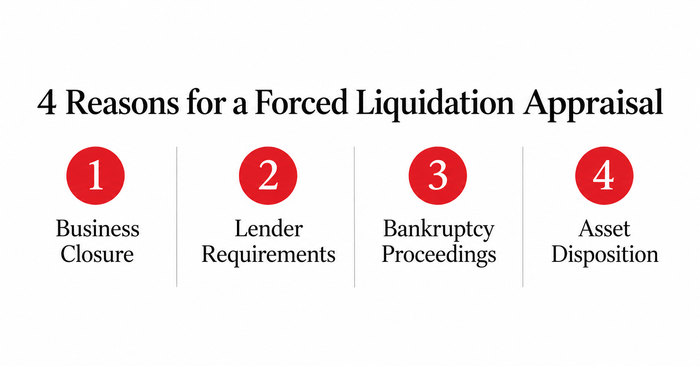
Business Closures
When a company closes, its machinery and equipment may need to be sold within a limited period. A Forced Liquidation Value appraisal can help estimate proceeds under the assumed sale conditions.
Loan and Collateral Reviews
Lenders may request liquidation values when evaluating equipment used as collateral. For example, a lender may want to understand potential recovery amounts under a specified sale scenario.
However, each lender determines which value definition and appraisal requirements apply.
Bankruptcy and Financial Restructuring
Financial difficulties may require businesses to evaluate equipment under different sale conditions. Forced Liquidation Value can provide information for certain bankruptcy or restructuring decisions.
However, the appropriate valuation premise depends on the legal circumstances and intended use.
Asset Disposition Planning
Businesses may need to sell equipment quickly because of operational changes or facility closures. In these situations, a liquidation appraisal can help support planning and financial decisions.
What Information Does a Machinery Appraiser Need?
Accurate equipment information helps an appraiser evaluate potential liquidation proceeds. Therefore, gathering relevant records can improve the efficiency of the appraisal process.
Useful documents include:
- Equipment inventory lists
- Manufacturer names and model numbers
- Serial numbers and manufacturing years
- Equipment photographs
- Maintenance and repair records
- Operating hours or usage information
- Details about upgrades or modifications
- Equipment location and removal requirements
- Expected sale timeframe and method
Not every assignment requires every document. However, complete records can help the appraiser identify the equipment and understand its marketability.
Depending on the assignment, an on-site inspection may also be appropriate. Alternatively, the appraiser may use photographs, equipment records, and other available information.
The inspection approach should reflect the intended use and the scope of work.
Example of Forced Liquidation Value in Equipment Appraisal
Hypothetical Example
A manufacturing company plans to close one of its facilities. The company owns several computer numerical control (CNC) machines, industrial presses, and material handling equipment.
Because the facility must close within a limited timeframe, the company wants to estimate potential equipment sale proceeds.
An Equipment Appraiser reviews the machinery’s condition, age, specifications, and market demand. The appraiser also considers the expected marketing period, sale method, and removal requirements.
Some machines may attract buyers quickly because of strong market demand. However, specialized equipment could require more time to locate interested purchasers.
The appraiser uses relevant market evidence and the defined sale conditions to develop a supported opinion of Forced Liquidation Value.
This valuation helps the company understand potential proceeds under the assumed restrictions. However, actual sale results may differ because of buyer participation and market conditions.
Why Forced Liquidation Value Matters
Forced Liquidation Value helps businesses and financial professionals evaluate equipment under restricted sale conditions. Without a supported valuation, decision-makers may rely on original purchase prices or unrealistic expectations about potential sale proceeds.
Furthermore, equipment markets can change as technology advances and buyer demand shifts. The time available to market assets can also influence the estimated value.
A professional appraisal considers these factors as of a specific effective date. It also documents the assumptions, methods, and evidence supporting the valuation.
As a result, intended users can better understand the financial implications of a potential equipment liquidation.
Understanding Forced Liquidation Value With Truman Mox
At Truman Mox, we provide machinery and equipment appraisal services for businesses and professionals with different valuation needs. Our work helps clients understand equipment values under defined market and sale conditions.
Our machinery and equipment appraisal services address a variety of appraisal purposes. We also offer machinery appraisal services for industrial machinery and specialized assets.
If you need to determine the Forced Liquidation Value of machinery or equipment, contact Truman Mox to discuss your appraisal requirements.