

When businesses apply for financing, lenders want confidence that the collateral supporting the loan has measurable and defensible value. That is where equipment appraisal becomes essential. Whether the financing involves construction equipment, manufacturing machinery, medical devices, transportation fleets, or agricultural assets, lenders rely on professional appraisals to assess risk before approving a loan.
An equipment appraisal for financing does far more than estimate what a machine is worth today. It helps lenders understand the condition, marketability, remaining useful life, and liquidation potential of the equipment securing the transaction. In many cases, the quality of the appraisal itself can directly impact loan approval, refinancing terms, or borrowing limits.
Understanding what lenders look for in an equipment appraisal can help business owners prepare more effectively and avoid delays during the financing process.
Why Equipment Appraisals Matter to Lenders
Lenders use equipment as collateral to reduce risk. If a borrower defaults, the lender may need to recover losses through liquidation or resale of the assets. Because of this, accurate equipment valuation plays a critical role in commercial lending decisions.
A professional equipment appraisal provides lenders with a detailed report outlining:
- Current market value
- Equipment condition
- Age and depreciation
- Remaining useful life
- Demand within the resale market
- Comparable sales data
- Potential liquidation value
Without a reliable valuation, lenders may struggle to determine how much financing can safely be extended. Inaccurate or unsupported valuations can create unnecessary risk for both the borrower and the lender.
This is especially important for industries with high-value machinery, fluctuating resale markets, or specialized assets that require expert analysis.
What Lenders Evaluate During an Equipment Appraisal
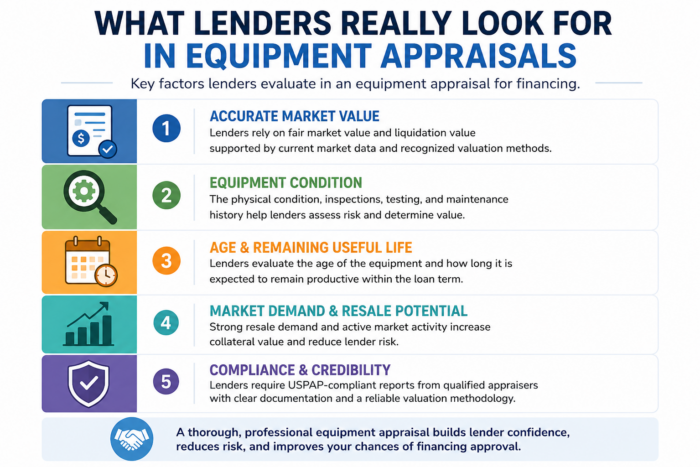
Not all equipment appraisals are equal. Lenders typically review several key factors before determining whether the appraisal meets underwriting standards.
Fair Market Value vs. Liquidation Value
One of the first things lenders examine is the valuation method used in the appraisal report. Two common valuation types include fair market value and orderly liquidation value.
Fair market value represents the estimated price the equipment would sell for in an open and competitive market where both buyer and seller act willingly.
Orderly liquidation value reflects the expected selling price when assets must be sold within a limited timeframe, often under financial pressure.
Lenders frequently compare both values to assess potential recovery scenarios if a loan defaults. Depending on the financing structure, liquidation value may carry significant weight because it represents the lender’s downside protection.
Why Equipment Condition Matters to Lenders
The physical condition of the equipment has a direct impact on financing decisions. Equipment that is poorly maintained, outdated, damaged, or missing critical components may lose value rapidly.
Professional equipment appraisal services often include:
- Visual inspections
- Operational testing
- Maintenance record reviews
- Serial number verification
- Photographic documentation
Lenders want assurance that the equipment is operational, marketable, and capable of retaining value throughout the loan term.
Even small issues can raise concerns. Excessive wear, deferred maintenance, or signs of improper use may reduce financing amounts or trigger additional underwriting scrutiny.
Remaining Useful
Lenders also evaluate how long the equipment is expected to remain productive. Assets nearing the end of their useful life may present higher collateral risk because they depreciate more quickly and become harder to resell.
For example, older manufacturing equipment with obsolete technology may have limited market demand despite appearing functional. On the other hand, late-model equipment with strong resale activity often supports better financing opportunities.
A certified equipment appraisal helps lenders determine whether the collateral aligns with the loan duration and repayment structure.
Common Red Flags That Impact Financing
Certain issues within an equipment appraisal can create concerns during underwriting. Understanding these red flags can help businesses avoid financing delays.
One major issue is inflated equipment valuations. Lenders expect appraisal reports to rely on accurate market data, not unrealistic estimates. Unsupported valuations can damage credibility and slow the approval process.
Another concern is incomplete documentation. Missing serial numbers, vague descriptions, or limited inspection details can make it difficult for lenders to verify ownership or collateral quality.
Market volatility is another factor lenders monitor closely. Some industries experience rapid equipment depreciation due to changing regulations, technological advancements, or economic conditions. Appraisers must account for current market trends rather than relying solely on historical pricing data.
Lenders may also question appraisals that fail to follow recognized industry standards. Reports prepared without proper methodology or compliance measures may not satisfy underwriting requirements.
Choosing the Right Equipment Appraisal Company
The quality of the appraisal provider matters just as much as the valuation itself. Lenders prefer working with experienced professionals who understand both the equipment market and financing requirements.
At Truman Mox, our machinery appraisal services provide:
- Independent and unbiased valuations
- Industry-specific expertise
- USPAP-compliant reporting
- Comprehensive market analysis
- Clear documentation and photography
- Transparent valuation methodology
Businesses seeking financing should also confirm that the appraisal company has experience working with lenders, banks, and SBA loan programs.
Professional appraisers understand how underwriting teams review collateral reports and can help ensure the appraisal meets financing expectations from the start.
Choosing the wrong appraisal provider can lead to inaccurate valuations, rejected reports, or additional appraisal costs later in the process.
How Appraisals Support SBA and Commercial Loans
Equipment appraisals are commonly required for SBA loans, equipment refinancing, mergers and acquisitions, bankruptcy proceedings, and asset-based lending.
For SBA financing in particular, lenders often require independent equipment appraisals when collateral exceeds certain thresholds. These reports help establish fair collateral coverage while ensuring compliance with lending guidelines.
Commercial lenders also use equipment appraisal reports when evaluating:
- Business expansions
- Working capital loans
- Lease financing
- Debt restructuring
- Portfolio risk assessments
In many cases, a well-prepared appraisal can improve borrower credibility and help streamline financing approval.
Businesses that proactively obtain accurate equipment valuation reports often experience fewer underwriting complications compared to companies scrambling to document asset value during the loan process.
Equipment Appraisal Requirements
An equipment appraisal is more than a simple estimate of machinery value. For lenders, it is a critical risk-management tool that influences financing decisions, collateral assessments, and loan structure.
Lenders want clear, defensible valuations supported by accurate market data, professional inspections, and recognized appraisal standards. They also look closely at equipment condition, remaining useful life, resale demand, and liquidation potential before approving financing.
Working with a qualified equipment appraisal company can help businesses strengthen financing applications while avoiding unnecessary delays or valuation disputes.
Whether you are pursuing SBA financing, refinancing existing equipment, or securing capital for business growth, investing in a professional equipment appraisal can provide the clarity and credibility lenders expect.